TUCSON, ARIZONA April 25, 2018 – Led by executive director Lee Frankel, the Coalition for Sustainable Organics (CSO), continued its advocacy efforts at the National Organic Standards Board (NOSB) Spring meeting to ensure the National Organic Program remains open to producers using containers and hydroponic cultivation methods.
Frankel testified, “Comprised of growers big and small, we [the CSO] advocate for the continued allowance of containerized growing methods under the National Organic Program, while enabling growers to select the most appropriate production system for their specific site and commodity needs.”
“In addition, the CSO was pleased to receive confirmation from the U.S. Department of Agriculture of the legal basis for these methods via Sections 6503 and 6512 of the Organic Foods Production Act,” stated Lee Frankel. “CSO has long argued that OFPA and the accompanying regulations do not prohibit containers and hydroponics from the organic program.”
“Thanks to USDA’s strong statement, producers can continue to meet the rising demand for fresh organic produce using a wide variety of environmentally sound and sustainable farming methods such as containers and hydroponics,” continued Frankel.
Following a presentation by Undersecretary Ibach on USDA efforts to increase organic integrity, members of the CSO, in addition to Frankel, testified today in Tucson, Arizona, at the meeting of the National Organic Standards Board. Members continued to show support for efforts to further strengthen and clarify the USDA organic regulations and ensure integrity in the USDA Organic Seal.
FOR MORE INFORMATION:
Lee Frankel, Executive Director
[email protected]
619-587-4341
#######
]]>JACKSONVILLE, FLORIDA, November 1, 2017 – “Everyone deserves organics,” stated Lee Frankel, the executive director of the Coalition for Sustainable Organics. “The members of the CSO are pleased that the majority of the members of the National Organic Standards Board rejected most of a series of proposals that would have started the process to change current US organic standards in order to revoke the certification of hundreds of growers around the world that incorporate container, hydroponic and aquaponic production tools on their organic farms and production locations.”
Frankel continued, “The ultimate impact of the proposals would have removed significant supplies of currently certified organic fresh vegetables and fruits from the market. We need more product that meets the high standards of the USDA Organic Program, not less. The most viable option to achieve this goal is to use all certified systems and scales of production, not to kick certain growing practices out of the industry. The organic industry should embrace and promote diversity rather than stifle it.”
Frankel added, “I am happy that enough members of the NOSB saw the wisdom of ensuring that organic rules do not arbitrarily discriminate against production in urban, desert, or tropical areas, nor should they exclude other systems that use containers and greenhouses. We should trust growers to make their own determination to know when growing in the soil or in containers make the most sense for the protection of the consumer and the ecology we all share.”
The members of the NOSB voted on Wednesday by a margin of 8 to 7 to reject the proposals to make Hydroponic and Aquaponic production methods prohibited practices under the USDA organic standards. In addition, the NOSB rejected the proposal by a vote of 8 to 7 to create prescriptive nitrogen ratios in other container production systems. The proposed definition of hydroponics was any system in a container (roots of a plant not in the outer crust of the Earth) that does not have at least 50 percent of the nitrogen needs of the plant in the container before planting and that no more than 20 percent of nitrogen needs are delivered through the irrigation system, watering cans or in a liquid form.
The NOSB did vote to make aeroponics a prohibited practice by a vote of 14 in favor of the ban with 1 member abstaining from the vote. This recommendation will now go to the U.S. Department of Agriculture. Given that the NOSB is technically a Federal Advisory Committee, the staff of the National Organic Program and other USDA officials will determine if the USDA will begin formal rulemaking to modify the existing USDA organic standards. The USDA typically will move forward with rule making or return the proposal for additional clarification. Only after a public comment period and regulatory review would the proposal convert into a regulation.
FOR MORE INFORMATION:
Lee Frankel, Executive Director
[email protected]
619-587-4341
#######
]]>Lee Frankel, the executive director of the CSO, stated that “The Coalition appreciates the leadership of Miles McEvoy in increasing communication between the USDA and the industry, creating prompter enforcement, establishing a database of certified operations, and embracing the diversity of the organic community.
Miles thanked the organic agriculture sector and specifically expressed his appreciation to the “thousands of organic farmers, ranchers, processors, handlers, and traders that produce, process and distribute organic products all over the world. Your work supports biodiversity, protects soil and water quality, and brings economic vitality to many communities; the certifiers and inspectors that verify that organic standards are met and enforce the standards when they are not; and consumers who choose organic and thereby support organic producers, handlers and organic agriculture.”
The CSO strongly supported Miles embrace of diversity within the organic sector. Specifically, Miles stated that “The organic world is diverse from many perspectives. Organic food is produced in diverse environments, from temperate climates to deserts to tropical rainforests. Organic farms and processors have developed a diversity of practices that comply with the organic standards and organic principles. Embracing this diversity of production is critical as the organic sector grows. Organic farms comes in all sizes and shapes. All types of people of varying cultural, religious and political perspectives participate. It is critical that we embrace organic diversity in all its size, shape and color.”
In addition, Miles also stated in his vision for the future, “Organic food should be available to everyone from the cities to the countryside. We need all systems and scales of production to transform the agricultural system.” This idea aligns closely with the vision of the CSO where “everyone deserves organics” through the expansion and inclusion of sustainable practices, including the use of containers.
The USDA has not established a firm time table for when a replacement will be named. Jenny Tucker, the current Associate Deputy Administrator for the past 6 years, will serve as the Acting Deputy Administrator.
#######
]]>FOR MORE INFORMATION:
Lee Frankel, Executive Director
619-587-4341
Coalition for Sustainable Organics Testifies at Senate Committee on Agriculture, Nutrition and Forestry
Theo Crisantes, VP Wholesum Harvest, Recommends Improvements to Organic Policy
Washington, DC, July 13, 2017 – Theo Crisantes Vice President of Operations for Wholesum Harvest and Board member of the Coalition for Sustainable Organics (CSO) was invited to testify at the Senate Agriculture Committee Hearing on “Opportunities in Global and Local Markets, Specialty Crops, and Organics: Perspectives for the 2018 Farm Bill†to share his concerns about recent attempts to limit the availability of organic produce. Mr. Crisantes explained to the Committee how the uncertainty created by the National Organic Standards Board (NOSB) has limited his willingness to expand production.
“The NOSB has drafted and considered proposals to eliminate containerized and hydroponic growing methods from organic certification,†said Mr. Crisantes. “These growing methods, which have been certified by USDA since the inception of the organic program, are crucial to meeting the rising consumer demand for organic produce.â€
Mr. Crisantes identified three actions to strengthen and streamline the organic policy making process, (1) allowing for expanded diversity of the NOSB to allow for a greater variety of viewpoints, (2) increased transparency, and (3) a stronger role for the NOP in setting NOSB priorities and regulatory actions.
Senate Agriculture Chairman Pat Roberts opened the hearing expressing concern that organic regulations and the operations of the National Organics Standards Board had exposed “uncertainty and dysfunction†in the process to maintain strong and transparent development of organic standards.Â
“These problems create an unreliable regulatory environment and prevent farmers that choose organics from utilizing advancements in technology and operating their businesses in an efficient and effective manner,†stated Chairman Roberts.  “Simply put, this hurts producers and economies in rural America.”
Comprised of growers from across the country, CSO is committed to maintaining the USDAâ€ s high standards for certifying organic produce and supports the continued allowance of containerized growing methods under the National Organic Program.
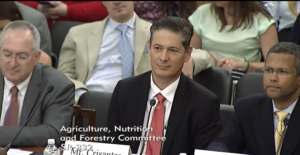
Photo Credit: CSPAN feed of Hearing
#######
]]>“The Coalition for Sustainable Organics believes that everyone deserves organic and this proposal will make it harder for consumers to access organic produce,” stated Lee Frankel, executive director for the Coalition. “The discussion document will diminish the relevancy of organic produce as a meaningful solution to the environmental challenges faced by growers. Organics should continue to allow growers adapt to their site-specific conditions within the parameters of avoiding the use of GMO’s, synthetic pesticides and fertilizers while creating active biological systems to nourish the plants. As noted in a 2016 survey of organic consumers, consumers overwhelmingly support the continued use of organic production systems that utilize containers.”
Karen Archipley, co-owner of Archi’s Acres, a certified organic greenhouse operation in Escondido, California producing living basil, kale and other fresh produce, expressed her concerns about the proposal. “I am deeply disappointed in the document. The Crops Subcommittee ignored the science regarding the rich biology we use to nourish our plants,” stated Archipley. “We are proud of the military veterans, their spouses and the many civilians that we have trained to grow using hydro-organic methods and to open their own new farms to deliver high quality and flavor products that our customers love. Organic growers must do our part to conserve natural resources and grow in harmony with nature based on the conditions in our local environment.”
Container Growing as a Sustainable Approach
Container growing is a controlled growing system in which plants derive nutrients from approved organic substances in water and/or growing material. A 2015 study[1] showed water savings of more than 90 percent for container systems versus open-field production systems. These growing methods promote sustainability in many ways:
- They generally require fewer resources per pound of fruits, vegetable or herbs produced compared to food grown outdoors in the soil
- In most cases, container growing uses less water, needs less land, significantly reduces soil erosion and extends the growing season of plants
- It also reduces runoff of nutrients or other chemicals into streams, lakes and water aquifers
Speak Up for Sustainable Organics
The U.S. Department of Agriculture has opened a formal comment period where everyone, including consumers, producers, restaurants and supermarkets can express their view on the Crops Subcommittee’s proposal.
“The future of our diverse and sustainable organic supply is at risk,” said Frankel. “People need to share their opinion with the U.S. Department of Agriculture and the National Organics Standards Board to allow our farmers to remain proud members of the organic family.”
Interested parties can express their opinion online by going to https://www.regulations.gov/document?D=AMS-NOP-16-0100-0001 and submitting a comment.
##############################
FOR MORE INFORMATION:
Lee Frankel, Executive Director
619-587-4341
[1] Lages Barbosa, Guilherme et al. “Comparison of Land, Water, and Energy Requirements of Lettuce Grown Using Hydroponic vs. Conventional Agricultural Methods.” Ed. Rao Bhamidiammarri and Kiran Tota-Maharaj. International Journal of Environmental Research and Public Health 12.6 (2015): 6879–6891.PMC. Web. 22 Sept. 2016. ]]>
We believe organic growing is and should continue to be defined by how plants are nourished and protected from pests and disease. Organic containerized growing methods use the same natural inputs as open field growers to nourish and grow crops. Not only are these growing methods organic, they significantly reduce the amount of land, water and other resources needed to grow organic produce, and, most importantly, ensure organic foods are more accessible so that everyone has the option to enjoy produce free of harmful chemicals and synthetic fertilizers.
Certified containerized growers adhere to the U.S. Department of Agriculture organic standards under the National Organic Program, and have been certified to grow organic produce by the USDA for more than 25 years. After extensive study in 2010, the USDA through the NOP opted not to change these high standards – and affirmed that organic produce can be grown through containerized methods. Based on the facts, science and existing law, we urge the Board to do the same, and maintain current standards. Making arbitrary changes to existing organic rules are a mistake that would stifle sound and sensible growing methods, putting hundreds of growing operations out of business and limiting the amount of organic produce available to the public.”
]]>FOR MORE INFORMATION:
Lee Frankel, Executive Director
619-587-4341
In Response to a Legal Action Filed by Cornucopia Institute against the California Certified Organic Farmers, Driscolls, Quality Assurance International and Wholesum Harvest, the Coalition for Sustainable Organics Has Released the Following Statement
SAN DIEGO, Calif., November 1, 2016 – “We are saddened, but not surprised, by the recent legal action filed by the Cornucopia Institute against California Certified Organic Farmers, Driscolls, Quality Assurance International and Wholesum Harvest Family Farms. It is the latest in a long line of tactics used to circumvent the regular procedures to work through long-standing industry and government institutions such as the National Organic Standards Board to determine the most appropriate policies for the organic industry,” stated Lee Frankel, executive director of the Coalition for Sustainable Organics.
“The Coalition believes that everyone deserves organics, and not just the economic elite,” continued Frankel. “The legal action threatens to significantly reduce existing supplies of many types of organic fresh produce currently nourishing consumers in this country in order to raise prices for a select few growers. The growers mentioned in the legal action are among hundreds of currently certified organic growers that use containers on their farms to sustainably produce fresh fruits, vegetables and herbs in accordance with all of the relevant US organic laws and regulations.
Nothing in either the Organic Foods Production Act of 1990 (“OFPA” or “Act”) or USDA’s National Organic Program[1] (“NOP”) regulations expressly prohibits an agricultural product from being labeled as organically produced if it was grown in water, air or any medium other than soil, nor does anything in the Act or the regulations require that agricultural products be grown in soil.
If a production practice is not prohibited or otherwise restricted by the OFPA, “that practice will be permitted unless it is determined that such practice would be inconsistent with the applicable organic certification program.”[2]
“I worry that future grower participation in the public hearing and comment process will be stifled by having special interest groups use extraordinary legal procedures to target organic farmers that participate with the National Organic Standards Board,” said Frankel.
#######
[1] 7 C.F.R. Part 205.
[2] 7 U.S.C.A. § 6512.
]]>FOR MORE INFORMATION:
Lee Frankel, Executive Director [email protected]
619-587-4341
Organic Farmers Should Be Allowed to Grow Organic Produce in Containers, Consumers Overwhelmingly Agree
SAN DIEGO, Calif., September 23, 2016 – More than 91 percent of consumers that purchase organic produce favor the current U.S. Department of Agriculture (USDA) policy that allows organic farmers to grow organic produce in containers, according to a survey conducted on behalf of The Coalition for Sustainable Organics.
This November, the National Organic Standards Board, the body that recommends changes to the USDA National Organic Program, is scheduled to consider proposals that will restrict or prohibit container-production methods from organic certification. These survey results demonstrate the negative impact that a program ban on organic container-grown food could have on consumer perceptions of the USDA.
Container Growing As a Sustainable Approach
Container growing is a controlled growing system in which plants derive nutrients from approved organic substances in water and/or growing material. A 2015 study[1] showed water savings of more than 90 percent for container systems versus open-field production systems. These growing methods promote sustainability in many ways:
- They generally require fewer resources per pound of fruits, vegetable or herbs produced compared to food grown outdoors in the soil
- In most cases, container growing uses less water, needs less land, significantly reduces soil erosion and extends the growing season of plants
- It also reduces runoff of nutrients or other chemicals into streams, lakes and water aquifers
“The Coalition believes that everyone deserves access to organic produce,” stated Lee Frankel, executive director of The Coalition for Sustainable Organics. “By restricting the organic label only to plants grown in the ground, the USDA would be choosing to supply fewer consumers with the quality organic produce they want and expect.”
“The Coalition believes that everyone deserves organics. By continuing to define organic growing by how the plants are nourished and protected from pests and disease, we can continue to increase the diversity and number of producers supplying consumers with what they want and expect.”
Additional Survey Findings
The survey also revealed other facets of organic growing that are important to consumers. 93 percent of respondents indicated that further reductions in pesticide use are extremely or very important, and 89 percent stated that the organic industry should focus on improved affordability. “Banning container systems would severely restrict existing supplies and raise the prices of items like tomatoes, berries, herbs, living lettuce and sprouts, just as consumers are demanding more of them,” stated Colin Archipley, owner of Archi’s Acres. Archi’s Acres is a farming enterprise that utilizes hydro-organic technology to grow organic produce. Headquartered in Escondido, California, Archi’s Acres is a certified organic greenhouse operation, which grows living basil, kale, and other herbs and produce.
“Maintaining current standards for certifying organic containerized growing simply makes sense. These production methods have brought new growers and more local production into the supply chain to serve the growing organic market. Changing the rules now would unfairly and unnecessarily limit the amount of organic produce available to the public,” said Colin Archipley.
Speak Up for Sustainable Organics
The U.S. Department of Agriculture has opened a formal comment period where everyone, including consumers, producers, restaurants and supermarkets can express their view on the matter. “The future of a diverse and sustainable organic supply is at risk,” said Lee Frankel. “People need to share their opinion with the US Department of Agriculture and the National Organics Standards Board to keep that supply as part of the organic family. They can do so over the internet by going to https://www.regulations.gov/comment?D=AMS–NOP–16–0049–0001 .”
#######
About the Survey
In late August and early September, 2016, Insight & Measurement, LLC conducted a survey of consumers of organic produce from the general population of the United States to assess attitudes toward container growing. The survey screened people into the survey who were:
- Ages 25 through 64 (quota-sampled for half older than 45, half younger than 45)
- Had total 2015 household income before taxes of at least $25,000
- For employment, must have been either employed full or part-time, self-employed, fulltime homemaker or retired (excluded students and not employed)
- Must do at least half of the grocery shopping for the household
- Overall, must purchase at least some organic produce
- Must plan to purchase at least some organic produce in next 30 days
The data was collected from 8/30/16 through 9/2/16.
About the Coalition for Sustainable Organics
The Coalition for Sustainable Organics is a group of environmentally and socially responsible growers of all sizes committed to maintaining the USDA’s current high standards for certifying organic produce. Through the Coalition, containerized growers large and small have united to ensure everyone who wants organic produce can have it.


#########
[1] Lages Barbosa, Guilherme et al. “Comparison of Land, Water, and Energy Requirements of Lettuce Grown Using Hydroponic vs. Conventional Agricultural Methods.” Ed. Rao Bhamidiammarri and Kiran Tota-
Maharaj. International Journal of Environmental Research and Public Health 12.6 (2015): 6879–6891.PMC. Web. 22 Sept. 2016.
]]>